Additional Travel Info
Short Itinerary of Bhutan 6 Day Tour
Day 01: Arrive Paro (2250m) & Transfer to Thimphu (2350m)
Day 02: Thimphu to Punakha (1310m) – Cycling Experience
Day 03: Punakha, Rafting & Khamsum Yulley Chorten Hike
Day 04: Punakha to Paro (2250m)
Day 05: In Paro, Hike to Taktsang Monastery, Tiger’s Nest (3120m)
Day 06: Paro Departure
Quick Facts
- Duration: 6 days / 5 nights
- Maximum altitude: 3,120m (Taktsang Monastery / Tiger’s Nest, Paro)
- Best seasons: October–November and March–May; manageable year-round
- Group size: 2 to 12 travellers (private departures available)
- Accommodation: 3-star and 4-star hotels and boutique lodges in Thimphu, Punakha, and Paro
- Transportation: Private air-conditioned vehicle throughout; cycling provided on Day 2
- Starting point: Paro International Airport
- Ending point: Paro International Airport
- Meals: Three meals daily (breakfast, lunch, and dinner)
- Visa: Bhutan visa and Sustainable Development Fee (SDF) arranged by us
- Difficulty: Easy to moderate, suitable for most fitness levels
- Tour type: Cultural, adventure, and nature combined
6-Day Bhutan Tour Package Route
The 6-day route forms a logical circuit that maximizes geographic variety while minimizing unnecessary travel.
The journey begins in Paro, Bhutan’s sole international gateway, before continuing to Thimphu, the capital city nestled in the Wang Chhu Valley.
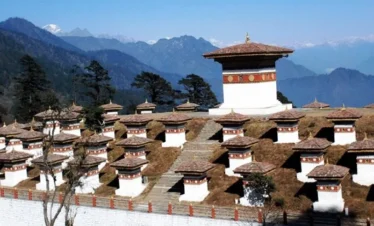
On Day 2, the route crosses Dochula Pass (3,050 m) before descending into the subtropical Punakha Valley (1,310 m), showcasing dramatic changes in altitude, climate, and scenery within a relatively short distance.
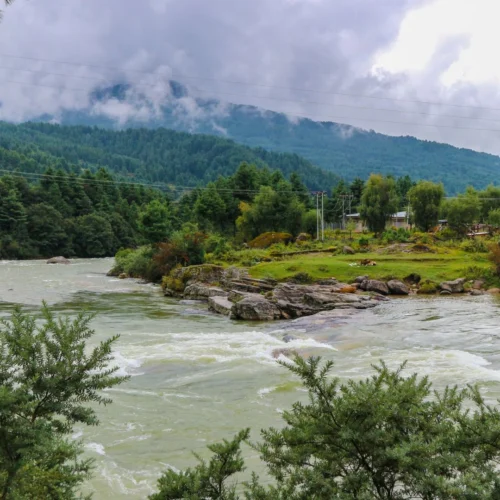
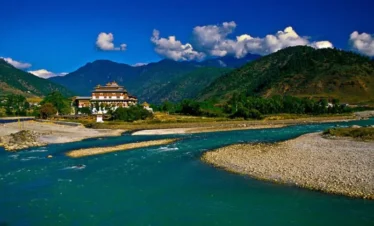
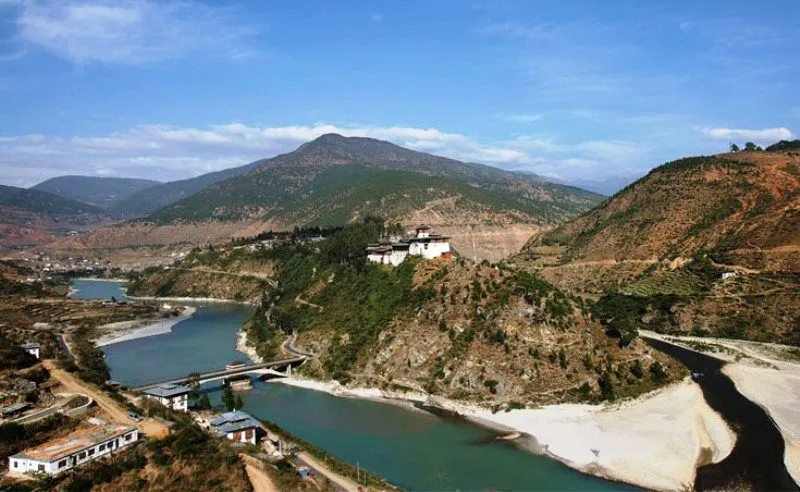
Days 3 and 4 are based in Punakha. Activities include rafting on the Mo Chhu River and a scenic hike to Khamsum Yulley Namgyal Chorten, offering panoramic views of the valley.
The journey then returns to Paro via the mountain highway, allowing travelers to experience Bhutan’s landscapes from a different perspective.
Day 5 is dedicated to the iconic hike to Tiger’s Nest Monastery, the highlight of most Bhutan itineraries, while Day 6 provides a relaxed morning before departure.
Throughout the tour, private vehicle transfers and the support of a licensed Bhutanese guide ensure a seamless travel experience across three of Bhutan’s most beautiful valleys.
Bhutan’s mountain roads wind through forested hillsides, river gorges, alpine passes, and traditional villages, making the journeys themselves an integral part of the adventure.
Your guide provides cultural insights, historical context, and logistical support throughout, transforming each destination into a deeper and more meaningful experience.
Who Can Go on the 6-Day Bhutan Tour Package?
This tour suits a wide range of travelers. No trekking experience or special skills are required. The difficulty is easy to moderate overall.
The most demanding activity is the Tiger’s Nest hike on Day 5, roughly 10km round trip with 900m of elevation gain, taking 4–5 hours at a relaxed pace.
The trail is well-maintained with stone steps and forested switchbacks. Most people with average fitness complete it without difficulty.
There is a teahouse halfway with lovely views for those who prefer to stop there. The Day 2 cycling follows a mostly flat route along quiet village roads.
The Day 3 rafting is Grade II, gentle and suitable for first-timers. Everything else involves short walks, cultural visits, and comfortable road journeys.
Families with children aged 10 and above, couples, solo travelers, honeymooners, and healthy senior travelers all complete this tour regularly.
If you have knee problems, a heart condition, mobility concerns, or questions about altitude, contact us before booking, and we will give you an honest answer.
What You Will Experience during Bhutan Tour Package
- Fly into Paro Airport, surrounded by Himalayan peaks on every side
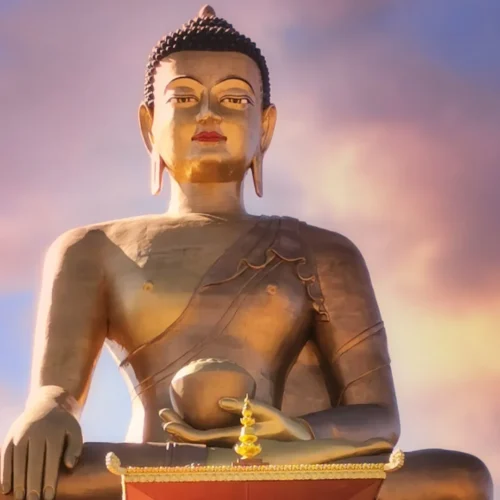
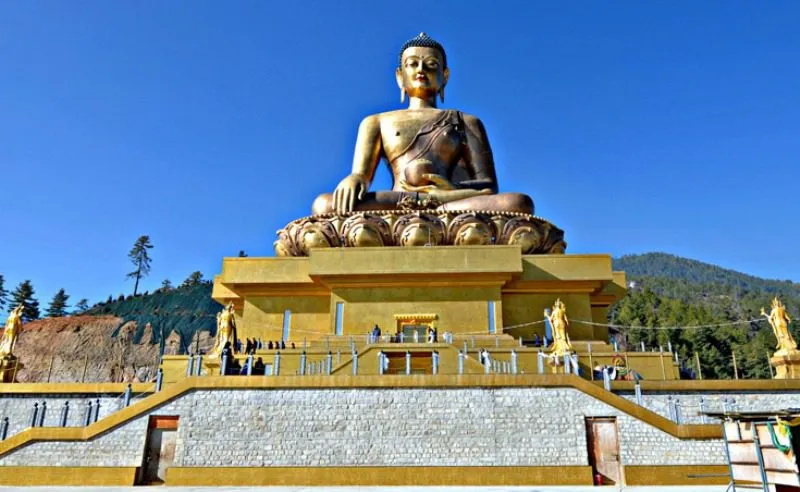
- Visit Tashichho Dzong and the giant Buddha Dordenma statue in Thimphu
- Stop at Dochula Pass (3,050m) for views of 108 white memorial chortens
- Cycle through the Punakha Valley past paddy fields and river villages
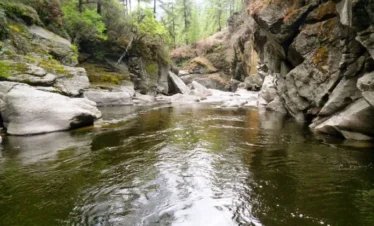
- Raft Grade II rapids on the Mo Chhu River, suitable for beginners
- Hike to Khamsum Yulley Namgyal Chorten with wide views of the valley below
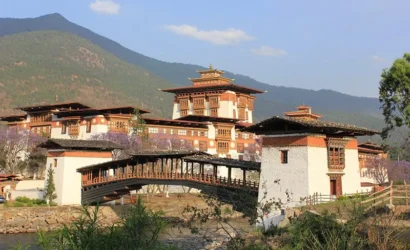
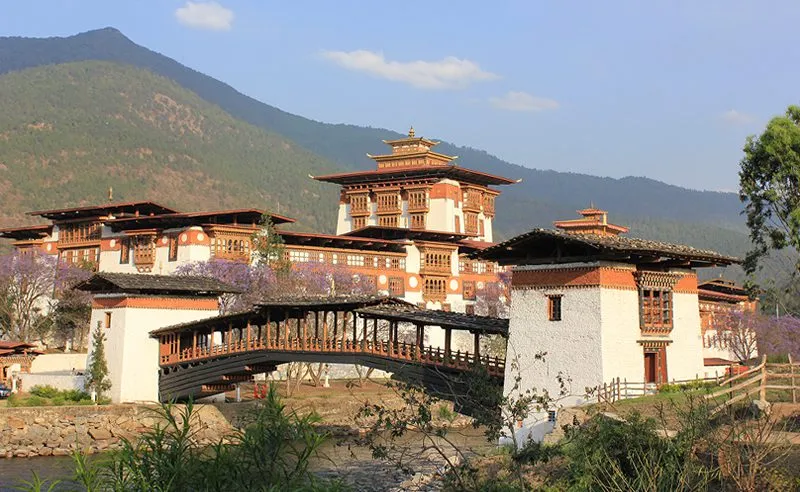
- Walk through Punakha Dzong, built in 1637 at the meeting of two rivers
- Hike to Tiger’s Nest Monastery, Bhutan’s most famous landmark
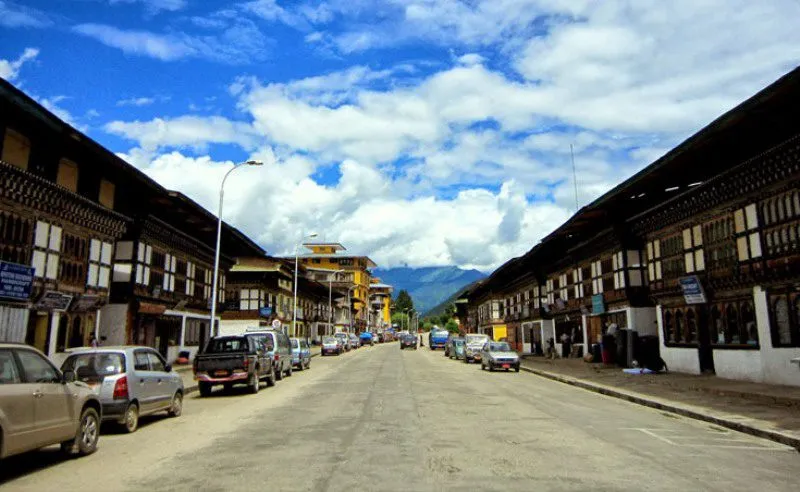
- Browse Paro’s main street for hand-woven textiles and wooden crafts
Best Season for the 6-Day Bhutan Tour
- Spring (March–May): Warm and clear, with rhododendrons blooming across the hillsides. This period is also when the Paro Tshechu festival takes place.
- Autumn (September–November): The clearest skies and the best mountain views. Dry trails, comfortable temperatures, and ideal conditions for all activities.
- Winter (December–February): Cold in Paro and Thimphu, but very few other visitors. Punakha stays warm. Good for travelers who want a quieter experience.
- Monsoon (June–August): Rainy with lush green scenery. Outdoor activities are still possible but mountain views may be limited.
Weather, Temperature & Climate
Bhutan’s climate varies with altitude, and each destination on this 6-day tour sits at a different elevation, creating a distinct microclimate.
Paro (2,250m) and Thimphu (2,350m) share a cool temperate climate: winters bring frost and occasional snow, spring and autumn are mild and sunny, and summer days are warm but evenings cool.
Punakha, at just 1,310m, is Bhutan’s warmest district, subtropical in character, with lush vegetation; warm afternoons throughout the year; and a relative humidity that gives the Mo Chhu valley a tropical lushness quite unlike the higher valleys.
Dochula Pass at 3,050m can be cold, windy, and cloud-covered even on otherwise clear days, and visitors should carry a warm layer regardless of the season.
Annual rainfall in the western valleys ranges from 1,000mm to 1,500mm, concentrated almost entirely in the monsoon months of June to September.
Outside the monsoon, Bhutan offers exceptionally clear mountain views due to its extensive forest cover, low industrial footprint, and Himalayan location.
Required Permits & Entry Fees
Bhutan operates a controlled tourism policy requiring all international visitors (except Indian, Bangladeshi, and Maldivian nationals) to book through licensed operators. All documentation is handled by Tour in Bhutan.
Standard requirements and fees:
- Bhutan Tourist Visa: processed through the agency, collected at Paro Airport on arrival
- Sustainable Development Fee (SDF): USD 100 per person per night (mandatory for international tourists; covers parks, conservation, government services)
- Paro Taktsang (Tiger’s Nest) Entry Fee: included
- Punakha Dzong Entry Fee: included
- Khamsum Yulley Namgyal Chorten Entry Fee: included
- Buddha Dordenma Monument Entry: included
- National Park and protected area permits: arranged and included
Note: The Royal Government of Bhutan may change SDF rates. Current rates are confirmed at booking.
Fitness and Difficulty
This tour is rated easy to moderate. You do not need trekking experience or any special skills. The hardest part is the Tiger’s Nest hike on Day 5.
It covers roughly 10km with 900m of elevation gain and takes 4–5 hours at a relaxed pace. The trail is well-maintained with stone steps and forested switchbacks.
Most people with average fitness complete it without trouble. The cycling on Day 2 follows a mostly flat route along quiet village roads.
Day 3’s rafting is Grade II, gentle and beginner-friendly. Everything else on the tour involves short walks, sightseeing, and comfortable road journeys.
Families with children aged 10 and above, couples, solo travelers, and healthy senior travelers all do this tour regularly.
If you have knee problems, a heart condition, or concerns about altitude, contact us before booking, and we can advise.
Accommodation & Meals
Hotels are hand-picked for location and character. In Thimphu, you stay in a well-appointed 3-star hotel with timber-framed interiors and traditional painted motifs.
In Punakha, boutique properties look out over rice paddies and the fortress monastery. In Paro, hotels are close to the Tiger’s Nest trailhead. 4-star and 5-star options are available on request.
Three meals are included every day. Breakfasts are at the hotel. Lunches on active days are packed or at local restaurants.
Dinners are at the hotel or carefully chosen local places.
Bhutanese food is bold and filling: ema datshi (chilli and cheese stew) is the national dish, served with red rice, steamed momos, and butter tea. Vegetarian, vegan, and gluten-free meals are available with advance notice.
Transportation
Every transfer is handled from landing to departure. A private, air-conditioned vehicle and experienced local driver are exclusively yours throughout the entire tour, providing complete flexibility over departure times, stops, and pace.
The team manages all road transfers between Paro, Thimphu, and Punakha; airport pickups and drop-offs; and cycling equipment arrangements on Day 2.
Bhutan’s mountain highway network winds through blue pine forests, prayer flag-draped ridgelines, dramatic alpine passes, and warm subtropical valleys.
The Thimphu-to-Punakha journey via Dochula Pass ranks among Asia’s most scenic road journeys. Travelers need only observe the landscape; all logistics are handled.
Travel Insurance
Comprehensive travel insurance is mandatory for all participants on this 6-day Bhutan tour package and must be arranged before departure.
Your insurance coverage must cover medical treatment and hospitalization, emergency medical evacuation by helicopter or air ambulance, trip cancellation and curtailment, and loss or damage to personal belongings and travel documents.
Bhutan has limited medical facilities outside Thimphu, and the cost of emergency helicopter evacuation, while rarely necessary, can be substantial without insurance cover.
We strongly recommend policies that specifically include high-altitude trekking cover, as some standard travel insurance policies exclude activities above a defined altitude threshold.
When purchasing your policy, confirm that Tiger’s Nest hike conditions (maximum 3,120m) are within the covered altitude range.
Please share your insurance policy details and emergency contact number with your guide on arrival.
Our team will keep a record on file throughout the tour and can assist with emergency claim documentation if required.
What to Pack
Clothing
- Moisture-wicking base layers (2–3 sets) for active days
- Lightweight fleece or mid-layer for cool mornings and evenings in Thimphu and Paro
- Waterproof and windproof outer jacket essential for Dochula Pass and mountain weather
- Comfortable trekking trousers (1–2 pairs); avoid jeans on hiking days
- Shorts or lightweight trousers for warm afternoons in Punakha
- Thermal underlayer if traveling in winter (December–February)
- Modest clothing for monasteries and dzongs: shoulders and knees covered; shoes removed on entry
Footwear
- Sturdy lace-up trekking shoes or hiking boots with ankle support, essential for Tiger’s Nest
- Lightweight sandals or slip-on shoes for evenings and monastery interiors
- Moisture-wicking hiking socks (3–4 pairs)
Daypack and Accessories
- Daypack of 20–30 litres for water, snacks, and layers on hiking days
- Reusable water bottle or hydration bladder at least 1.5 litres (plastic bags and single-use plastics are banned in Bhutan)
- Trekking poles recommended for the Tiger’s Nest descent available locally if needed
- Sunscreen SPF 50+, UV-protective sunglasses, and a wide-brimmed hat
- Insect repellent, particularly for the Punakha valley
- Headlamp or torch with spare batteries
- Small first-aid kit: blister plasters, pain relief, antihistamine, personal medications
- Camera or smartphone with ample storage
- Power bank for charging on the go
- Universal travel adapter: Bhutan uses Type D and Type F plugs
Altitude Sickness & Prevention
The highest point on this 6-day Bhutan tour is Taktsang Monastery at 3,120m on day five, with Dochula Pass at 3,050m reached on day two and day four.
While these altitudes are well below the threshold at which severe altitude sickness typically develops (generally above 3,500m), mild symptoms of Acute Mountain Sickness (AMS) can occur in sensitive individuals, particularly those who have flown directly from low-altitude origin cities and are ascending quickly.
Paro and Thimphu, both above 2,200m, represent your first exposure to elevation, making the acclimatization time on day one important.
Drinking plenty of water, avoiding alcohol on the first night, eating light meals, and allowing your body to rest are the most effective measures.
If you have previously experienced altitude sickness or have cardiovascular or respiratory conditions, consult your doctor before travel and discuss whether acetazolamide (Diamox) is appropriate for prophylactic use.
Common AMS symptoms to watch for:
- Persistent headache, particularly behind the eyes or at the temples
- Nausea or loss of appetite
- Fatigue or weakness disproportionate to physical exertion
- Dizziness or lightheadedness
- Difficulty sleeping or disturbed sleep at altitude
- Shortness of breath at rest (a more serious symptom requiring immediate attention)
Prevention measures:
- Ascend gradually; this itinerary is structured to allow natural acclimatisation
- Drink 3–4 litres of water per day throughout the tour
- Avoid alcohol for the first 24–48 hours after arrival
- Eat small, carbohydrate-rich meals; avoid heavy or fatty foods on arrival days
- Inform your guide immediately if any symptoms develop; do not attempt to push through serious AMS
- Carry ibuprofen or paracetamol for mild headache relief
- Descend if symptoms worsen; your guide is trained to respond to altitude-related health situations
Emergency & Medical Evacuation
The safety and well-being of every traveler is our highest operational priority.
All guides on this tour are trained in wilderness first aid and carry a comprehensive first-aid kit, first-aid equipment, and emergency communication devices and have direct radio or mobile contact with our operations center.
In the event of a medical emergency, your guide will make an immediate assessment and coordinate with our team to arrange the most appropriate response.
Bhutan’s primary referral hospital is located in Thimphu and is reachable from all destinations on this itinerary within two to three hours by road.
For situations requiring advanced care or evacuation, Bhutan’s helicopter rescue services operate out of Paro and Thimphu and can access remote locations when weather permits.
Our operations team maintains 24-hour emergency contact throughout your tour and will liaise directly with your travel insurance provider to coordinate medical evacuation if required.
We strongly recommend storing your guide’s emergency contact number, your insurance policy details, and the contact information for your country’s embassy in Bhutan in an easily accessible location before departure.
Comprehensive travel insurance that covers emergency helicopter evacuation and high-altitude rescue is mandatory for all participants on this tour and must be arranged before you travel.
Guide & Porter
Every group on this 6-day Bhutan tour package travels with a licensed, English-speaking Bhutanese guide from day one to day six.
Bhutanese law requires all tourists to be accompanied by a licensed guide at all times outside of designated free-time periods, and our guides exceed this standard in both qualification and character.
Each guide holds approval from the Tourism Council of Bhutan, has a minimum of five years’ field experience, and brings deep personal knowledge of Bhutanese history, Buddhist philosophy, dzong architecture, and local customs that no guidebook can replicate.
They are your cultural interpreter, logistical coordinator, safety monitor, and, more often than not, the highlight of the trip for many travelers.
Porters are available on request for the Tiger’s Nest hike on day five, which is particularly useful for travelers who prefer to hike without a heavy daypack or who would benefit from additional support on the ascent.
Important Notes
- Paro Airport operates under visual flight rules. Low visibility can delay flights.
- Cover your shoulders and knees when visiting monasteries and dzongs.
- Photography inside temples is not allowed. Your guide will tell you before you enter.
- Carry Bhutanese ngultrum for souvenirs, tips, and small purchases in rural areas.
- Plastic bags are banned across Bhutan. Bring a reusable bag.
- Tobacco products are heavily restricted.
- Wi-Fi and mobile coverage work well in towns but can be patchy in remote areas.
- The itinerary may change slightly due to weather, festivals, or road conditions.
Ready to Book?
Send us your travel dates and group size. We’ll reply within 24 hours with a full inclusions list and personalized itinerary. Email: info@tourinbhutan.com
Write a Review