-
3,120m/10,240 ft
-
Full board (breakfast, lunch and dinner)
-
March to May and September to November
-
Government approved 3 stars and Above
-
Private car, van or bus (Depends on group size)
Overview of the Nepal-Bhutan Tour
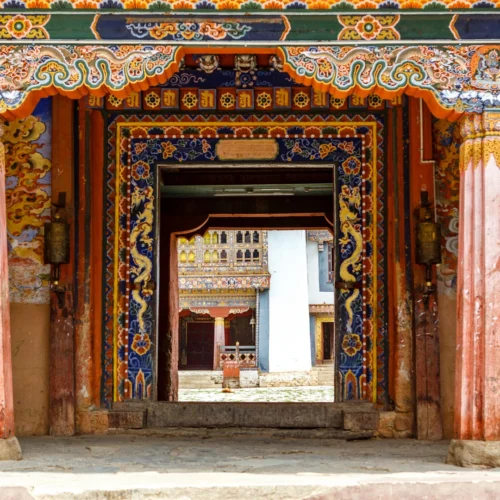
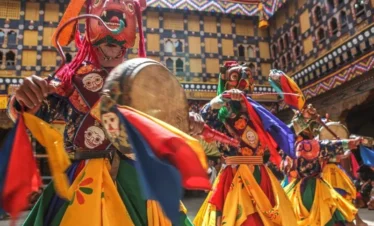
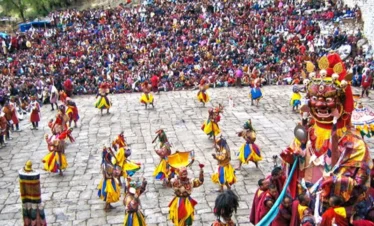
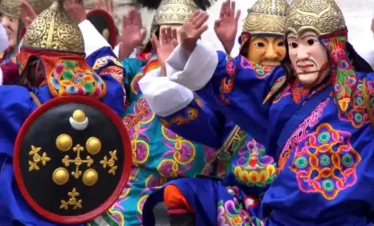
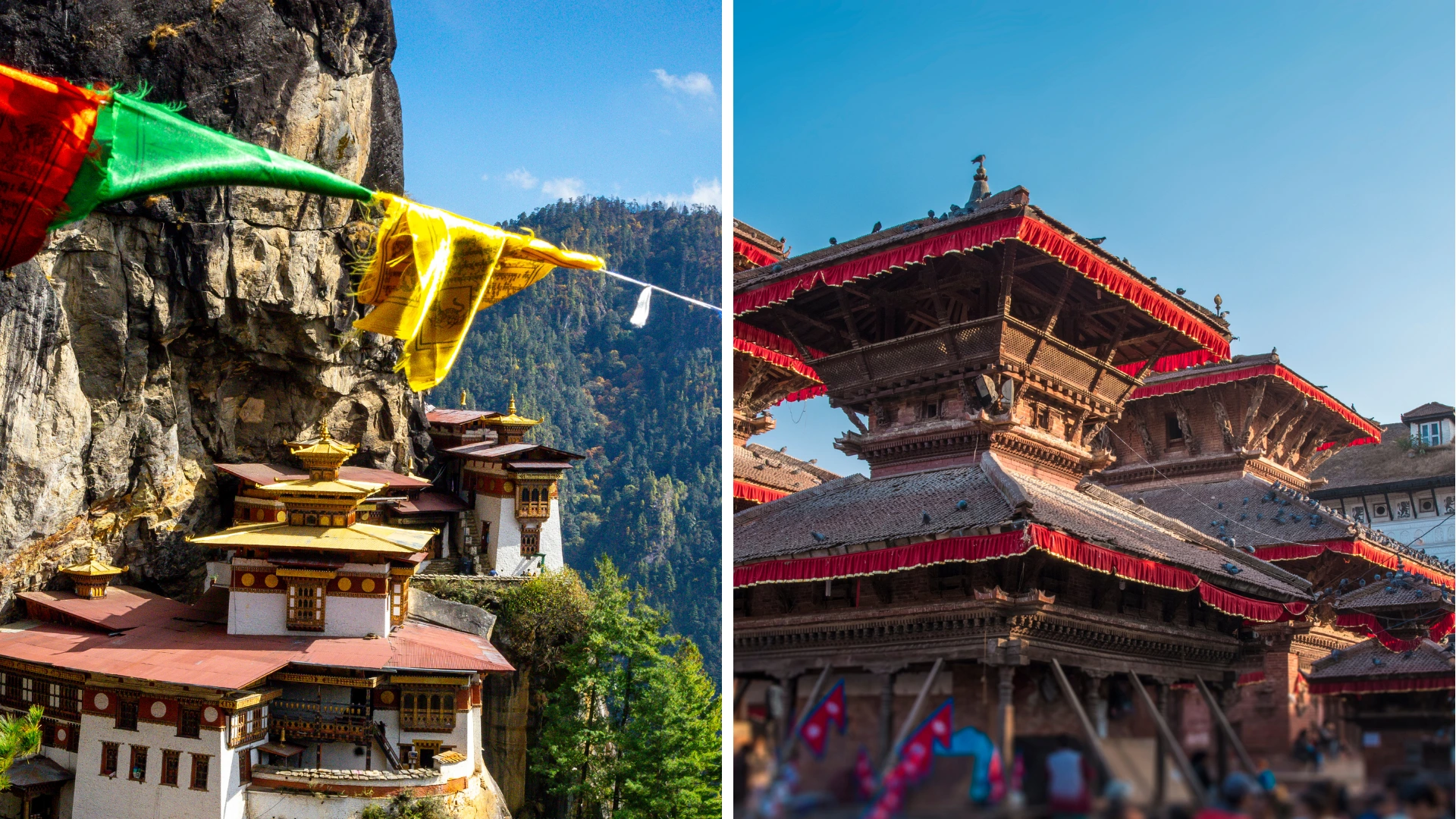
The Nepal-Bhutan tour is discovering the two beautiful countries tucked high up in the Himalayas. Witness the culture & tradition, art & architecture, landscape & daily life, and sights & sounds that are somewhat similar but a bit different in both of the countries.
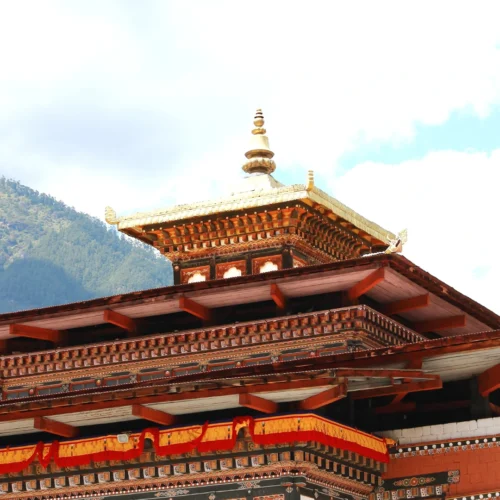
Bhutan is the world’s only officially Buddhist country, whereas Nepal is the amalgamation of both Buddhist and Hindu religions. Many Buddhist monasteries and temples, new and old, are scattered all over Bhutan, whereas in Nepal, you can find both Buddhist monasteries & stupas and ancient Hindu temples & shrines and old palaces.
The Nepal and Bhutan tour starts with Kathmandu sightseeing, which includes visiting the 4 UNESCO World Heritage Sites in Kathmandu City: Kathmandu Durbar Square, with its ancient palaces and temples; Swayambhunath, the ‘Monkey Temple’ (a Buddhist stupa atop a hill overlooking the Kathmandu Valley); Pashupatinath (a Hindu temple located at the holy Bagmati River); and Boudhanath (the largest Buddhist stupa in Kathmandu City).
Explore the serene beauty of Pokhara, a beautiful lakeside town in Nepal. Witness the Himalayan sunrise from Sarangkot, go for a Pokhara city tour, or go boating at the Phewa Lake.
The Nepal-Bhutan tour then proceeds towards Bhutan, flying to Paro from Kathmandu; en route, you will witness the world’s tallest mountains, including Mt. Everest.
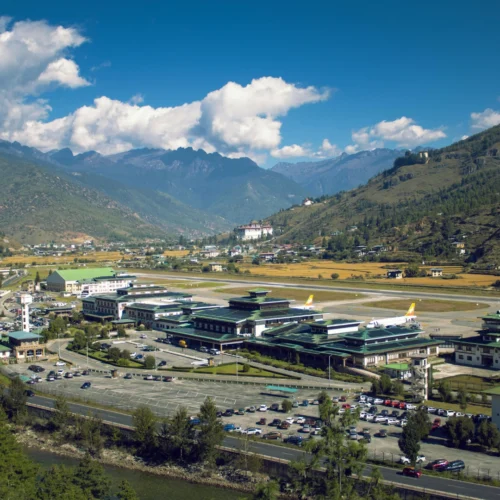
After landing at Paro International Airport, you will breathe in the clean, fresh air of the land of the thunder dragon.
The tiny capital of Thimphu has many remarkable places to visit, such as Buddha Point atop a hill with the view of the Thimphu Valley, Tashi Choe Dzong, the Folk Heritage Museum, the Centenary Farmers Market, the new authentic craft bazaar, and King’s Memorial Chorten.
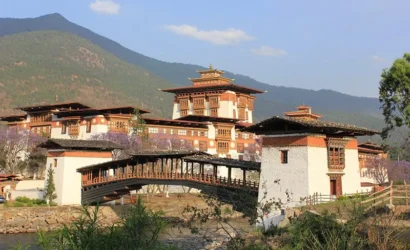
Visit Punakha Dzong in Punakha, located at the confluence of Po-chu and Mo-chu (the male and female rivers), which is arguably the most beautiful dzong in Bhutan.
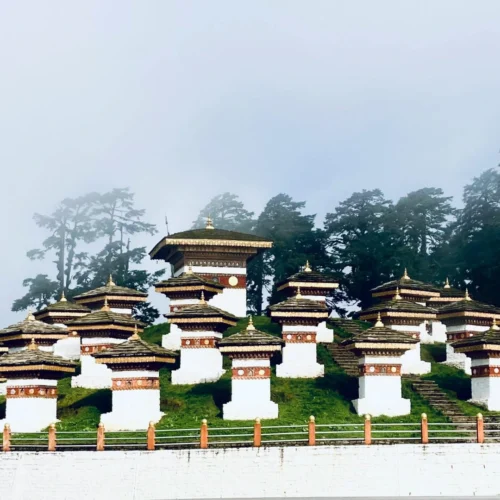
En route from Thimphu to Punakha is the Dochula Pass (3140 m) with 108 chortens, the viewpoint from which a spectacular Himalayan view of the eastern mountains can be observed on a clear day.
Closer to Punakha is the Chimi Lhakhang, ‘the temple of fertility’ dedicated to Drukpa Kunley. Explore the Phobijikha Valley, one of the beautiful valleys in Bhutan, at Gangtey.
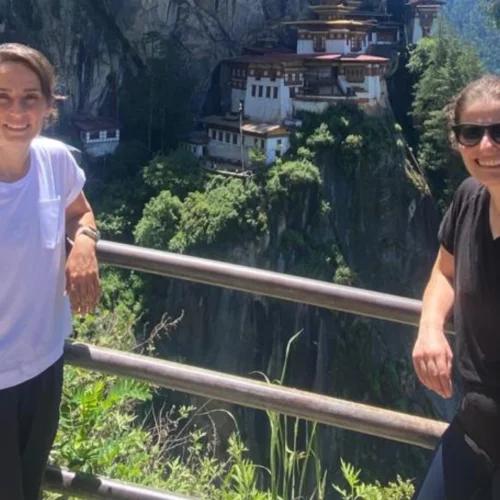
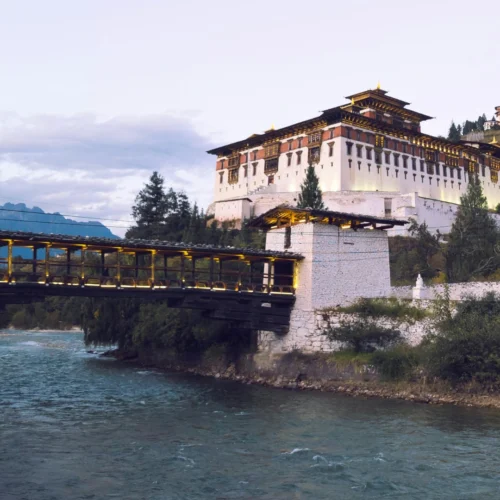
In Paro, visit the Paro Rinpung Dzong and Kichu Lhakhang—the oldest temple in Bhutan—then go for the ever-popular hike to the Taktsang Monastery ‘Tiger’s Nest’ (3120 m), which is located on a vertical cliff that defies all engineering logic and is on the outskirts of Paro town.
It’s believed Guru Padmasambhava flew on the back of a tigress and meditated here in the 8th century.
The Nepal and Bhutan combined tour ends in Paro, with a flight back to your onward destination from Paro International Airport.
Highlights
- Visit the 4 UNESCO World Heritage Sites in Kathmandu namely Kathmandu Durbar Square, Swayambhunath ‘Monkey Temple’, Pashupatinath & Boudhanath.
- Discover Urban lifestyle of people living in Kathmandu.
- Enjoy sightseeing tour of the natural wonder and lakeside city of Pokhara.
- Witness panoramic views of the Himalayan range, sunrise and Pokhara city from Sarangkot.
- Pokhara city tour with visit to Davis fall, Gupteshwor cave, World Peace Pagoda, Bindhyabasini temple, boating at Phewa lake.
- Witness spectacular bird’s eye view of the Himalayas while flying in/out from Paro.
- Explore Paro exploding with colors and tradition.
- Guided city tour of the tiny capital Thimphu.
- Hike to Taktsang Monastery ‘Tiger’s Nest’ (3120 meters).
- Punakha Dzong – the most beautiful monastery in Bhutan.
- Explore the Phobjikha Valley in Gangtey, the most beautiful valleys in Bhutan.
- Witness unique culture, tradition, and lifestyles of Bhutan.
Day-to-Day Itinerary
Day 01: Arrive in Kathmandu (1400m)
Day 02: In Kathmandu – Sightseeing (4 UNESCO World Heritage Sites)
Day 03: Drive to Pokhara by Tourist Bus
Day 04: In Pokhara – Sarangkot Sunrise tour & Pokhara Sightseeing
Day 05: Pokhara to Kathmandu by Tourist Bus
Day 06: Fly to Paro from Kathmandu & transfer to Thimphu (2350m)
Day 07: Thimphu – Punakha (1310m)
Day 08: Punakha – Gangtey (2320m)
Day 09: Gangtey – Thimphu (2350m)
Day 10: Thimphu – Paro & Hike to the Taktsang Monastery ‘Tiger’s Nest’ (3120m)
Day 11: Paro – Depart
What to expect:
The typical itinerary for this tour basically visits the following locations/landmarks.
Day 01: Arrive in Kathmandu & meet at the airport, then transfer to your hotel.
Day 02: In Kathmandu – Cultural sightseeing at the 4 UNESCO World Heritage Sites, namely Kathmandu Durbar Square with ancient palaces & temples, Swayambhunath ‘Monkey Temple’ atop a hill overlooking the Kathmandu Valley, Pashupatinath ‘Hindu temple of Lord Shiva’ on the banks of the holy Bagmati River, and Boudhanath Stupa – the largest Buddhist stupa inside the Kathmandu Valley.
Day 03: Kathmandu to Pokhara by tourist bus (7-8 hour drive) PM: At leisure/Free to explore.
Day 04: In Pokhara – At the break of dawn, drive to Sarangkot from Pokhara (30 min) & witness spectacular sunrise over the Himalayas. Then back to the hotel for breakfast & proceed with Pokhara sightseeing, visiting interesting places like Davis Fall, Gupteshor Cave, Tibetan Refugee Camp, World Peace Pagoda, International Mountain Museum, Bindabasini Temple, suspension bridge.
Day 05: Pokhara to Kathmandu by tourist bus. PM: At leisure/Free to explore.
Day 06: Fly to Paro from Kathmandu (1 & half hour flight approx.) then transfer to Paro town for lunch and visit Paro Rinpung Dzong. Afterwards, drive to Thimphu (1 hr) for overnight stay.
Day 07: Sightseeing in Thimphu, visiting several important landmarks like National Memorial Chorten, Institute of Traditional Medicine, Folk Heritage Museum, Textile Museum, Buddha’s Point overlooking the Thimphu Valley.
Then drive to Punakha, crossing over the Dochula Pass (3050m) with 108 chortens, from where a spectacular Himalayan panorama can be seen on a clear day.
Day 08: Drive from Punakha to Gangtey & into the Phobijikha Valley, one of the most beautiful valleys in Bhutan. Visit the Gangtey monastery and take the Gangtey natural trail hike just down from the monastery.
Day 09: Drive from Gangtey to Thimphu. En route, take a short hike just above the rice fields to Chimi Lhakhang, ‘the temple of fertility,’ dedicated to Drukpa Kunley.
Day 10: Drive to Paro from Thimphu, then drive further to the base of Taktsang and take a hike up to the monastery. It’s about 2 hours hike up to the cafeteria, from where enjoy the spectacular view of the monastery.
Further walking up will reach the monastery. Afterwards, hike back to the road head & drive/visit Kiyhu Lhakhang – one of the oldest temples in Bhutan, en route to Paro town
.
Day 11: Bid farewell to the land of the thunder dragon & transfer to the Paro International Airport to catch your onward flight.
Upon arrival at the Kathmandu airport, our representatives will meet/greet you then transfer to your hotel. Afterwards, you can rest at your hotel or free to explore around town.
Overnight at Hotel in Kathmandu (Breakfast only)
After breakfast, you will meet your city guide and the driver, who will take you on the Kathmandu Sightseeing tour of the 4 UNESCO World Heritage Sites, highlighting the culture & traditions, art & architecture of Nepal, including witnessing the daily lives of Kathmandu residents.
UNESCO World Heritage Sites include Kathmandu Durbar Square (with age-old palaces, Hindu temples, shrines), Swayambhunath ‘Monkey Temple’ atop a hill overlooking the Kathmandu Valley, Pashupatinath – a Hindu temple located at the holy Bagmati River, and finally Boudhanath – the largest Buddhist Stupa inside the Kathmandu Valley.
Afterwards, back at the hotel. Overnight at Hotel in Kathmandu (Breakfast Only)
Drive from Kathmandu to Pokhara (7-8 hours); you will come across the Nepalese countryside, passing along small towns, rivers, fields, highway tea shops & restaurants. (Driving hours depend upon the traffic conditions/season of travel).
In the evening, you’ll have free time to explore around the beautiful lakeside city of Pokhara. Overnight at Hotel in Pokhara (Breakfast Only)
At the break of dawn (around 4.30 am), drive to Sarangkot to witness an eye-popping view of sunrise from its ridge. From the parking lot, we need to walk for a couple of minutes to reach its vantage point.
Sarangkot offers a great view of some of the highest mountains of Nepal, like the Annapurna Range, including Machhapuchhre ‘Fishtail’. Later on, drive back to the hotel for breakfast and continue with our city tour.
Pokhara Sightseeing tour takes you to the famous Bindabasini Temple dedicated to goddess Durga, Seti River Gorge, Davis Falls, the longest cave in South Asia – Gupteshwor Cave, etc. We will then drive to the World Peace Stupa situated on the hilltop just above Phewa Lake, providing a great view of Fewa Lake and the magnificent Himalayas from its vantage point.
We will also visit the Tibetan Refugee Camp, which is a habitat for numerous exiled Tibetans. Hanging around the lakeside in the evening and boating in Fewa Lake for some time is indeed great fun. Overnight at a hotel in Pokhara (Breakfast Only)
After breakfast, drive back to Kathmandu. Upon reaching Kathmandu, check-in hotel, and the rest of the time is at leisure or free for shopping.
Driving from Pokhara to Kathmandu is 7-8 hours approx depending on the highway road conditions. Overnight at Hotel in Kathmandu (Breakfast Only)
Transfer to the airport in Kathmandu and fly to Paro, witnessing the world’s highest mountain range, including Mt. Everest. Upon arrival at the Paro International Airport, as you step down from the plane, a cool, clean, fresh air greets the visitor, the first gift of Bhutan. After clearing customs and visa formalities, meet the representatives and the Bhutanese guide, and head out to Paro town for lunch.
Visit the Paro Rinpung Dzong in 1646 by Shabdrung Ngawang Namgyal, the first spiritual and temporal ruler of Bhutan. (Breakfast/Lunch/Dinner included)
Then drive to Thimphu (1-hour drive) & sightseeing around Thimphu, visiting many landmarks like Buddha Tenzin, Takin Preserve to see the Takin – Bhutan’s national animal, Tashichoe Dzong, Memorial Chorten – a monument erected in memory of Bhutan’s third king H.M. Jigme Dorji Wangchu, Centenary Farmers Market, the new authentic craft bazaar, National Institute of Traditional Medicine, Folk Heritage Museum – a 300-year-old traditional house converted into a museum.
Overnight at a hotel in Thimphu (Breakfast/Lunch/Dinner included)
After breakfast, drive to Punakha from Thimphu for about 2-3 hours. After steeply climbing through the pine & cedar forests come Dochula pass (3,050 m). The pass commands panoramic Himalayan views of the eastern mountains in a clear day.
After stopping here for tea and witnessing a spectacular Himalayan panorama, the road descends along a series of hairpin bends to the fertile valley of Punakha. En route to Punakha, take a short hike to Chimi Lhakhang, ‘the fertility temple’ built in 1499 dedicated to Drukpa Kunley.
Today mostly visited by women who couldn’t bear Children, thus also known as the temple of fertility. In Punakha, visit Punakha Dzong, crossing the bridge. It’s the ancient capital of Bhutan, connecting the Mo Chu & Pho Chu Rivers.
It is also the winter capital for the monks and the Je Khenpo (chief abbot). Overnight at a hotel in Punakha (Breakfast/Lunch/Dinner included)
After breakfast, drive to Gangtey via Wangdue. The drive is through winding mountain roads, passing along oak and rhododendron forests, over the high pass, and down to the Phobijikha Valley, considered one of the most beautiful glacial valleys in Bhutan.
Phobijikha Valley is also the chosen home for the black-necked cranes that migrate from the Tibetan Plateau during winter.
Visit the Gangtey Monastery and, just down below the monastery, go for the Gangtey nature trail hike for about 1 & half hours through the jungle before emerging to the valley floor. Overnight at a hotel in Gangtey (Breakfast/Lunch/Dinner included)
Drive back to Thimphu, retracing the same route for about 4 hours’ overland drive. Ascend back to the pass from Phobijikha Valley rejoin the main east-west highway just beneath the Pele La pass.
Then descend to Wangdu town, with changing vegetation, and continue west again, climbing up to Dochula Pass with another opportunity to witness the spectacular eastern Himalayas, and finally descend to the Thimphu Valley.
Overnight at a hotel in Thimphu (Breakfast/Lunch/Dinner included)
Early in the morning, drive to Thimphu and then drive to the base of Taktsang for the hike up to the monastery. Start the hike up until reaching the cafeteria, which takes about 2 hours. From here, enjoy a spectacular view of the Taktsang Monastery.
Further hike from the cafeteria (the halfway point) will reach the monastery, where it’s believed that Guru Padmasambhava landed on the back of a tigress in the 8th century.
After breakfast, drive towards the base camp of Taktsang for the hike up to the Taktsang Monastery-Tiger’s Nest. It’s about two hours hike up to the monastery. From this point, enjoy the spectacular view of the monastery, where Guru Padmasambhava landed on the back of a tigress in the 8th century.
Then visit the Taktsang Monastery and hike back to the road point, then drive to Kyichu Lhakhang, one of the oldest and most sacred shrines in Bhutan.
Afterwards, return to the hotel. Overnight at Hotel in Paro (Breakfast/Lunch/Dinner included)
After breakfast, transfer to the airport for your onward flight. Bid farewell to the remote and legendary Dragon Kingdom disappearing again behind its guardian mountains. (Breakfast only)
Includes/Excludes
The Package Includes
- Airport pick-up and drop-off by private vehicle.
- Accommodation in 4 or 5 stars hotel as per your requirements.
- Bhutan visa fee – including all necessary processing
- Route Permit
- Three meals per day during your stay in Bhutan
- A licensed Bhutanese tour guide
- All land transportation by private vehicle
- Camping equipment and haulage for trekking tours
- Sightseeing as per itinerary
- Monuments entrance fees where applicable
- Drinking water
- All internal taxes and charges
- A sustainable development fee of $65. (This sustainable development fee goes towards free education, free healthcare, poverty alleviation, along with the building of infrastructure.)
The Package Excludes
- Monuments entrance fees where applicable as per the itinerary
- Airfare & Travel Insurance
- Expenses of personal nature, Tips to guides and drivers
- Expenses occurred due to unavoidable events i.e. road wrecks, flight delays, etc.
Additional Trip Info
Visas to Bhutan
All citizens except those from India, Bangladesh, and the Maldives require a visa to enter Bhutan. It requires a readable color copy of your passport, and the passport should have at least six months of validity from your Bhutan exit date. The visa fee is US$40 per person.
The tour’s full payment must be made before you arrive in Bhutan, as per the Tourism Council of Bhutan (TCB.
Visa procedures
To apply for the visa, you need to send clear copies of your passports to your travel agent in JPEG or PDF formats via email. Upon full tour payment receipt, the Tourism Council of Bhutan then issues the visa clearance letter to your travel agent, which in turn will send it to you.
Please bring this letter and show it at the Paro International Airport in order to get your passport stamped with the actual Bhutan visa. Please note that the VISA service is not offered in Bhutan; travelers have to buy full service package from the local tour operator.
A printed copy of the visa letter also needs to be shown during check-in at the Druk Air counter. Entering Bhutan overland via Phuentsholing or Samdrup Jokhar, one needs to present the visa letter at the immigration office.
Accommodation
There’s a wide selection of hotels in Bhutan from 3-star to world-class 5-star hotels in prominent places like Paro, Thimphu, Punakha, Gangtey, etc. 3-5 star hotel are officially government-approved hotels.
Besides, there are hundreds of standard and budget hotels scattered throughout Bhutan, including homestays farm house stays.
Travelers’ daily cost includes stays at 3-star hotels, and using 4-star or 5-star will require an additional premium. Top 5-star hotels in Bhutan include Le Méridien, Taj Tashi, Como Uma, etc.
Meals
During the stay, all meals are included from breakfast to lunch and dinner. Breakfast and dinners will be at the hotels where travelers are staying, and lunch might be at the restaurant during the sightseeing tour.
However, on the last day of the tour, the travel agent is obliged to provide breakfast only, and any lunch/dinner will be travelers’ own.
Meals in Bhutan include a mix of Indian and continental, including Bhutan special cuisines such as Ema Datshi, Momos, etc.
Transportation
Traveling in Bhutan is easy nowadays, with Bhutan rapidly developing its infrastructure and road system. Until 1961, traveling in Bhutan was quite difficult, with no proper means of transportation in the country.
One had to travel either on foot or on mule/horse back. After 1961, modern road construction began, with most of the districts and towns getting interconnected via roadways.
Nowadays, comfortable ground transport and public vehicles are accessible in major cities. Different luxurious cars, SUVs, buses, and coaster buses are available for tourists.
Guides
Every guide in Bhutan must complete a training course so that visitors get high-quality professional service. Over 1000 licensed active tour guides are working in the country. Guides specialize either in cultural or adventure tours.
All Bhutanese guides are helpful and friendly and proficient in English. Many guides have also learnt other languages like German, Japanese, Thai, or others for better communication with travelers from these countries. All tour operators must employ only registered and certified guides.
How to get to Bhutan
There are two options to get into Bhutan by air or by land. One can fly to Bhutan and land at the only international airport of Bhutan – the Paro International Airport. Alternatively, by land, one can enter Bhutan via Phuentsholing from the west, connecting with Bagdogra Airport, Siliguri, West Bengal, or Kakarbhitta, Nepal.
Gelephu is the entry point if you are travelling from the central region, and Samdrup Jongkhar from the east. Exiting through Samdrup Jongkhar in southeast Bhutan connects you to Guwahati in India.
From Guwahati, you may fly into other Indian cities like Delhi, Bombay or Kolkata. Even though Bhutan shares its border with Tibet, there are no treaties established yet to open the border crossing between these two countries.
Flights to Bhutan
Only two airlines connect Bhutan with the rest of the world: Druk Air (the national flag carrier) & Bhutan Airlines (Privately owned airline). These airlines fly into the Paro International Airport in Paro – the only international airport in Bhutan.
They also fly from certain cities only, like Kathmandu, Delhi, Singapore, Bangkok, Kolkata, Bagdogra. Airline flight schedules change by season, but there are several flights per week from Kathmandu, New Delhi, Singapore, and Bangkok, either direct or via Dhaka, Kolkata, or Bagdogra.
Flights into Paro are dependent upon the weather conditions due to the geographical location of Paro airport, so flight timings are subject to change.
Therefore, all passengers are advised to maintain a minimum of 24 hours connection time to avoid disconnection.
Best time to visit Bhutan
The best time to visit Bhutan is spring (March-May) and Autumn/fall (September-November). Weather mostly remains clear during spring, when the mystifying beauty of nature can be witnessed, and varieties of flowers and plants bloom.
June-August is the summer season, and the monsoon starts in June. Fall (Sep-Nov) is another high season after spring, during when tourist arrives Bhutan for festivals like Thimphu Tshechu, Gangtey Tshechu, and Jambay Lhakhang Drup.
Winter season (Dec-Feb) isn’t crowded when temperature level goes down (even below freezing point), and Bhutan may see snowfall. Trekking won’t be possible at high elevations in winter due to snow.
Trip Note (Nepal)
Best Time to Visit Nepal
Spring (Mar, Apr, May) & autumn (Sep, Oct, Nov) are the best seasons to visit Nepal. Weather will be pleasant for any activities during these months, with skies being clear with un-obscured Himalayan views.
These are the high tourist seasons in Nepal. Monsoon is Jun, July, till August, during when trek/tour will be difficult. In the rain-shadow areas like Mustang, Dolpo, and Tibet, trekking is possible as these areas receive less rainfall even in monsoon.
Dec, Jan & Feb are the winter season during when trek can be possible in the hilly areas, but higher elevations will be much colder with snowfall. Another thing to keep in mind is that due to global warming, the regular climate worldwide isn’t the same, and Nepal is also no exception.
Please be open to unpredictable weather conditions.
Nepal Visa Information
A visa for Nepal can be directly obtained upon arrival at Tribhuvan International Airport in Kathmandu. You need to fill out the application form, or, for a swift process, fill it out online before arrival in Nepal.
Indian nationals don’t require a visa; however, they need to show a valid national identification, like a passport or other valid ID issued by the Indian government.
A tourist visa can also be obtained for a Bhutan tour from the Nepal Embassy or Consulate, or at the office of immigration in Nepal as well. Visa fee is as follows:
Visa Fee/Duration/Type
1) Multiple entry (15 days) is USD 30 or Equivalent Nepali Currency (NPR)
2) Multiple entry (30 days) is USD 50 or Equivalent Nepali Currency (NPR)
3) Multiple entry (90 days) is USD 125 or Equivalent Nepali Currency (NPR)
Visa Extension:
Visa extension fee for 15 days or less is USD 30 or Equivalent Nepali Currency (NPR), and visa extension fee for more than 15 days is USD 2 per day.
Tourist visa can be extended for a maximum period of 150 days in a single VISA year (Jan – Dec)
How to Get to Nepal
Nepal can be entered either by air or via land.
By Air: Rest of the world is connected with Nepal by more than 15 major airlines. National Airlines (NA), the national flag carrier, flies into Delhi, Bangkok, Shanghai, Kuala Lumpur, and Dubai.
Other international airlines connects Kathmandu are Thai Airways from Bangkok, Gulf Air from Abu Dhabi, Indian Airlines from Delhi, Kolkata, and Varanasi in India, Qatar Airways from Doha, China Airlines to Lhasa, Druk Air to Paro in Bhutan, and New Delhi in India, etc.
By Land
Nepal is connected with India on three sides and with China to the north. From China is at the Kodari Pass at the Nepal-China border.
Entering from India are several entry points like Kakarbhitta, Birgunj, Belhiya, Bhairawa, Nepalgunj, Dhangadi and Mahendra Nagar.
Tourists entering via land must carry their passports, and a visa is issued at the immigration office at the Nepal-India border.
Flights to Nepal
‘Tribhuvan International Airport’ in Kathmandu is the only international airport of Nepal. It is linked by about 30 international airlines operating from Europe, Asia, and the Middle East. These include China Airlines, Biman Bangladesh, Gulf Air, Qatar Airways, Thai Airways, etc.
Nepal Airlines is the national carrier connecting Delhi, Bangkok, Shanghai, Kuala Lumpur, Dubai, etc.
September to November and March to May is the peak tourist seasons, during which flights are the most expensive, so it’s advisable to book in advance. All taxes are included in ticket prices for international flights.
The drive from Kathmandu central city to the airport is about 15 minutes, but depending upon traffic which gets heavy during the day time and might take an hour during peak rush hour.
Money Exchange & Banks
NPR (Nepalese Rupees) is the currency denomination of Nepal. Banks and authorized exchange dealers exchange foreign currencies. You can find many money exchange counters in Kathmandu and other cities.
Credit/Debit Cards
Major hotels and shopping malls accept major credit cards like VISA/MASTER/AMEX and Discover. Convertible currencies are the Dollar (US, Australian, Hong Kong, Canadian, and Singapore), Euro, Pound, Yen (Japan), etc.
You have the privilege of exchanging Nepalese rupees back to your currency at the airport before leaving Kathmandu for home.
Cash/ATM Machines
ATM machines are available in Kathmandu and other cities of Nepal. ATMs operate 24 hours a day. Using ATMs during office hours (10 am-5 pm) is recommended.
Banks
Kathmandu and other cities of Nepal have many banks. The normal banking hours are 9:30 AM to 5 PM, but some banks open evening and morning counters to facilitate customers.
Banks remain closed on Saturdays and on public holidays. Money can also be sent or received from express services like Western Union and MoneyGram.
Time and Business Hours
The normal business hours are from 10 AM to 5 PM. Saturday is a government holiday in Nepal. Hospital and emergency services are open 24/7. Banks operate their services during normal business hours. Restaurants, hotels, and bars are open till late at night.
Shopping malls and stores are open till 8 or 9 PM. Usually, it is safe to travel in odd hours in cities like Kathmandu and Pokhara, but traveling in the odd hours in isolated area is not recommended.
Travel Insurance
Travel insurance is recommended for Nepal, which should cover loss, theft, and medical problems. For high-altitude treks going over 4000 meters, travel insurance is highly recommended and should cover helicopter rescue and medical bills.
Most of the medical treatments, rescues/hospitals required you to pay at the point of delivery of their services, so it’s wise to choose a policy that pays them directly rather than you having to pay on the spot and claim later.
Trip Reviews
Posted on Google![Google]()
![Amees Florence profile picture]() Amees Florence
Amees FlorenceTrustindex verifies that the original source of the review is Google.
Posted on Google![Google]()
![Ravi Jaisi profile picture]() Ravi Jaisi
Ravi JaisiTrustindex verifies that the original source of the review is Google.
Posted on Google![Google]()
![Silent Shadow profile picture]() Silent Shadow
Silent ShadowTrustindex verifies that the original source of the review is Google.
Posted on Google![Google]()
![Bishnu Gaire profile picture]() Bishnu Gaire
Bishnu GaireTrustindex verifies that the original source of the review is Google.
Posted on Google![Google]()
![Tena Rosser profile picture]() Tena Rosser
Tena RosserTrustindex verifies that the original source of the review is Google.
Experiencing Bhutan and it’s people and it’s culture and tradtions is a beautiful travel experience in itself. It’s a magical journey into the land high up in the Himalayas. We were lucky that we found this company ‘Happiness Drukyul Holidays’ who were completely flexible, professional and up to the mark. Mr. Sonan, our guide did his job well and introduce to Bhutan’s unique culture and traditions. We learnt more of Buddhism from him. Highly recommended & thank you for this beautiful holiday experience.Posted on Google![Google]()
![Landslake Chef profile picture]() Landslake Chef
Landslake ChefTrustindex verifies that the original source of the review is Google.
We did a 6 day tour with our guide Sonam. He was extremely helpful, very knowledgeable about the history and culture of Bhutan and overall friendly and relaxed. Highly recommended.